

Find the notebook that fits your writing routine
Leuchtturm1917 Some Lines A Day
A 5-year memory book for writing a few lines each day, with a hardcover, elastic closure, ribbon marker, and daily comparison layout.
This Leuchtturm 1917 5 Year Memory Book durability review looks at the “Some Lines A Day” format after a full five years of daily use. That is the best possible durability test for this kind of journal, because a five-year diary is not supposed to be used for a few weeks and forgotten. It needs to survive being opened, written in, handled, and stored again almost every single day.
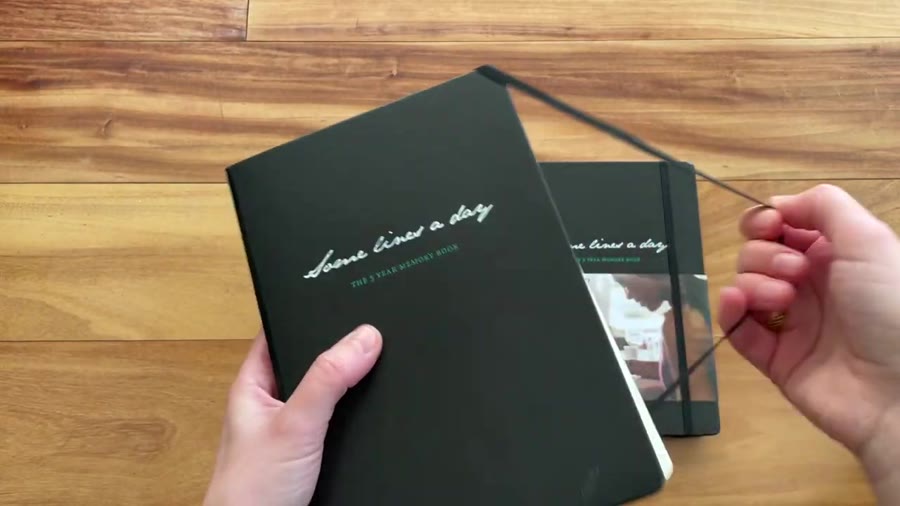
The notebook in the video was used from 2016 through 2020, then compared with a fresh copy for the next five-year cycle. After that much use, the big question is whether the book still feels intact. The answer is yes. The binding was still tight, the hardcover had held up, the pocket still looked good, the bookmarks had not frayed, and the only real wear note was that the elastic had become a little looser.
Quick verdict
The Leuchtturm1917 Some Lines A Day memory book is a strong option if you want a compact way to preserve daily memories across several years. It is not a long-form diary. The point is to capture a few important lines each day, then come back the next year and see what changed. For that job, the format is excellent.
Durability is also better than I would expect from a notebook that was genuinely used for five years. A slightly looser elastic after that long is not a dealbreaker. If anything, it is the most normal kind of wear. The more important pieces—the binding, pages, hardcover, bookmarks, and pocket—were still in very good shape.
| Notebook type | Five-year daily memory journal |
|---|---|
| Best for | Short daily reflections, memory keeping, yearly comparisons, and compact journaling. |
| Format | One calendar date per page, with space for five yearly entries. |
| Durability result | Held up extremely well after five years of daily use. |
| Main drawback | Small daily writing spaces are not meant for long diary entries. |

How the five-year format works
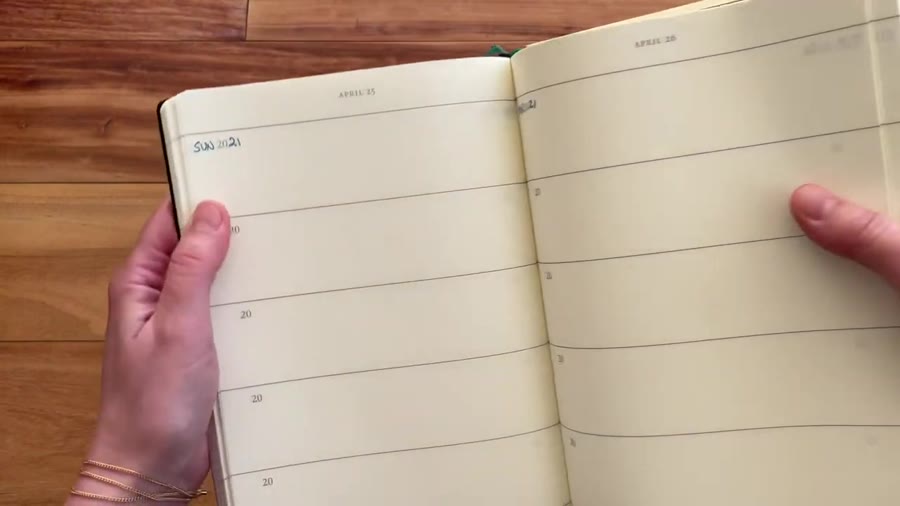
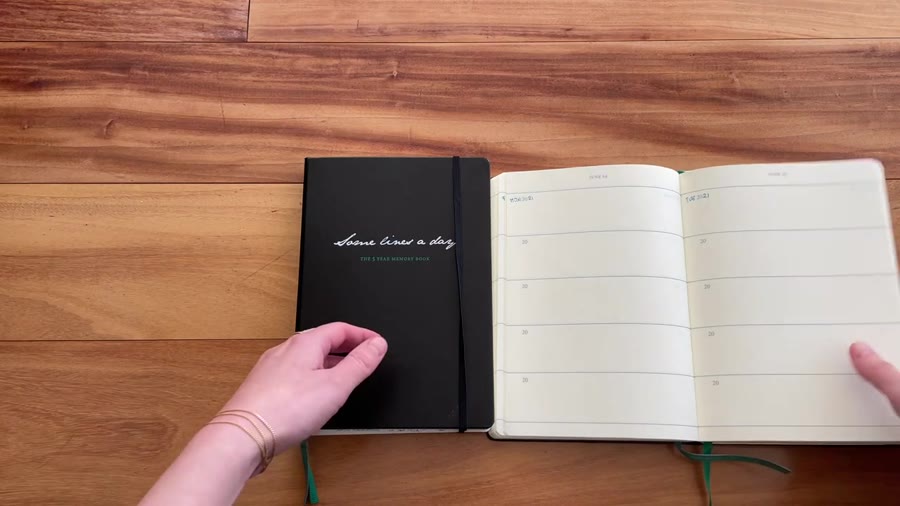
The idea behind this notebook is simple. Each page is assigned to a date, and that page has space for five entries, one for each year. You write a few lines for that day, then return to the same page the next year. Over time, it becomes a layered record of what you were doing, thinking, noticing, or feeling on that exact date across multiple years.
That layout is the real charm. It lets you compare year by year without needing to keep stacks of separate planners. In the video, that was one of the biggest advantages: instead of storing a planner from every year, this one compact book preserved the highlights. You can see when trips happened, what changed, what stayed the same, and what mattered enough to write down.
Binding after five years
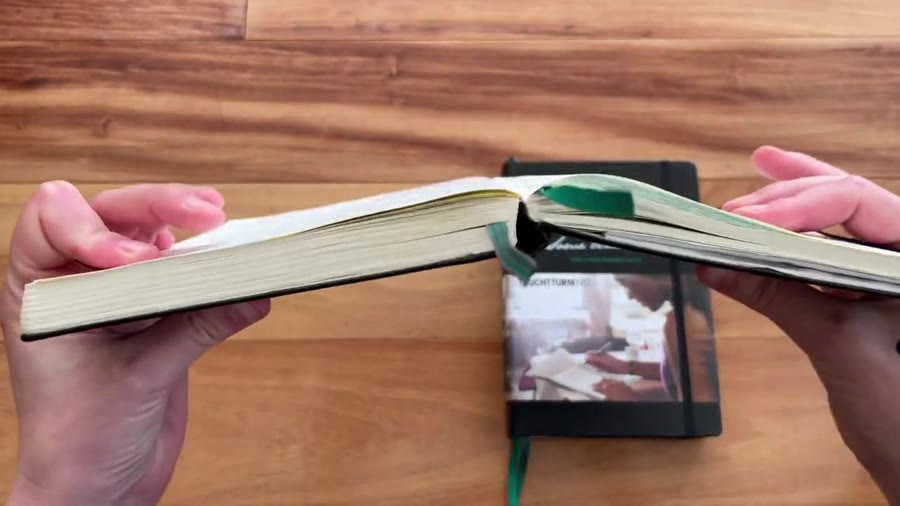
The binding is the most impressive part of this durability check. A five-year journal gets opened repeatedly in the same way, and it has to handle a lot of small daily interactions. After five years, the binding on this copy was still tight and secure. It had not fallen apart, and the pages were still held cleanly in place.
That matters even more with a memory book than with a normal notebook. A regular journal only needs to survive until it is filled, but a five-year book becomes more valuable the longer you use it. If the binding failed in year three or four, the whole idea would feel risky. Seeing it still solid at the end of the fifth year makes the notebook feel trustworthy.
Cover, elastic, bookmarks, and pocket
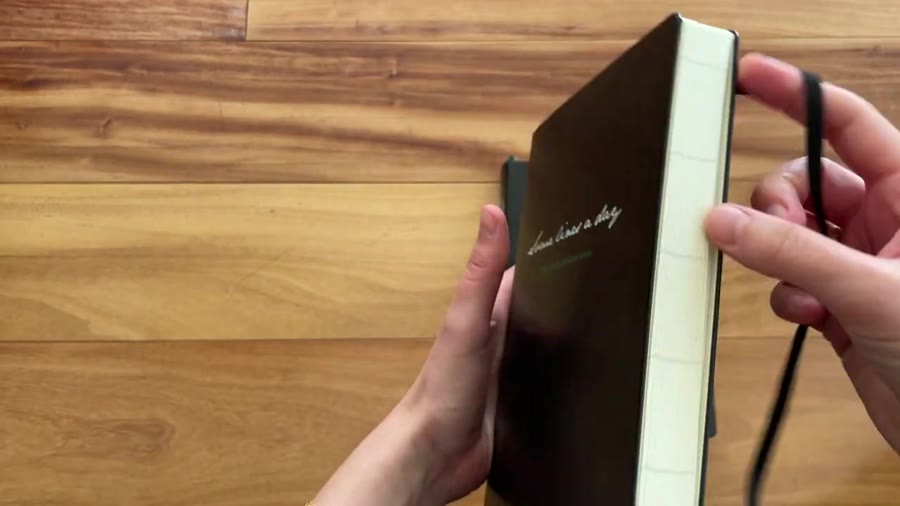
The hardcover still looked neat after years of handling. It had the kind of normal lived-in feel you would expect, but not major structural damage. The back pocket also still looked good, which is reassuring because pockets can peel, stretch, or tear when they are poorly made. Even if you do not use the pocket heavily, it is still nice when it remains clean and attached.
The elastic was a little looser after five years, and that feels completely fair. Elastic closures are always under tension, and most notebooks with elastic bands will relax over time. The more important point is that it had not completely failed. The bookmarks were also in good condition and had not frayed, which is a small but meaningful sign of build quality.
Paper and writing experience
The paper performed well for the purpose of the notebook. The newer copy felt just a tiny bit more absorbent than the older one, according to the video, but it did not create a major paper-quality issue. For short daily writing, the 80 gsm paper makes sense because the book needs to hold a lot of dated pages without becoming too bulky.
This is not the notebook I would choose if you want large expressive journaling pages or heavy ink testing. The spaces are small by design. But for writing ten to fifteen important things from the day, or a compact paragraph about what happened, the page layout is enough. It encourages you to capture highlights rather than overthink the entry.
Pros and cons
| Pros | Cons |
|---|---|
|
|
Who it is best for
This is best for someone who wants to remember daily life without maintaining a full diary. If you like the idea of seeing what you did on the same day one, two, three, or five years ago, the format is genuinely satisfying. It is especially good for people who want a compact personal archive: trips, milestones, ordinary routines, seasonal changes, and small details that would otherwise disappear.
It is less suited to people who want wide pages, long emotional entries, sketching space, or decorative planner layouts. The book works because it limits you. That limit can feel freeing if you only want to record the most important notes from the day.
FAQ
Does the Leuchtturm1917 5 Year Memory Book last the full five years?
Based on this used copy, yes. After five years of daily use, the binding was still tight, the hardcover was intact, the bookmarks had not frayed, and the pocket still looked good.
How much can you write each day?
Each daily section is small. It is best for a few lines, highlights, short reflections, or a compact list of what happened that day.
Does the elastic closure stretch out?
It can loosen over time. In the video, the elastic was a little looser after five years, but that was the main visible wear point and felt expected.
Is it better than keeping yearly planners?
If your goal is memory keeping, it can be. One five-year book is much easier to store than several old planners, and it makes year-by-year comparison much simpler.
Final Thoughts
The Leuchtturm 1917 5 Year Memory Book is one of those products where long-term durability matters more than first impressions. After five years of use, this copy still looked dependable. The binding stayed strong, the pages stayed together, the pocket and bookmarks were still neat, and the elastic only showed the kind of loosening I would expect from years of daily handling.
If you want a full diary, this is not spacious enough. But if you want a practical, compact, and surprisingly durable way to track a few lines every day for five years, the Some Lines A Day book makes a lot of sense.
Find the notebook that fits your writing routine
Leuchtturm1917 Some Lines A Day
A durable five-year memory journal for preserving short daily notes without keeping a shelf full of old planners.